
Lawn Care
What Should Basic Lawn Maintenance Actually Include?
Mowing is one of four jobs. If the quote does not mention trimming, edging and blow-off, ask what is included.
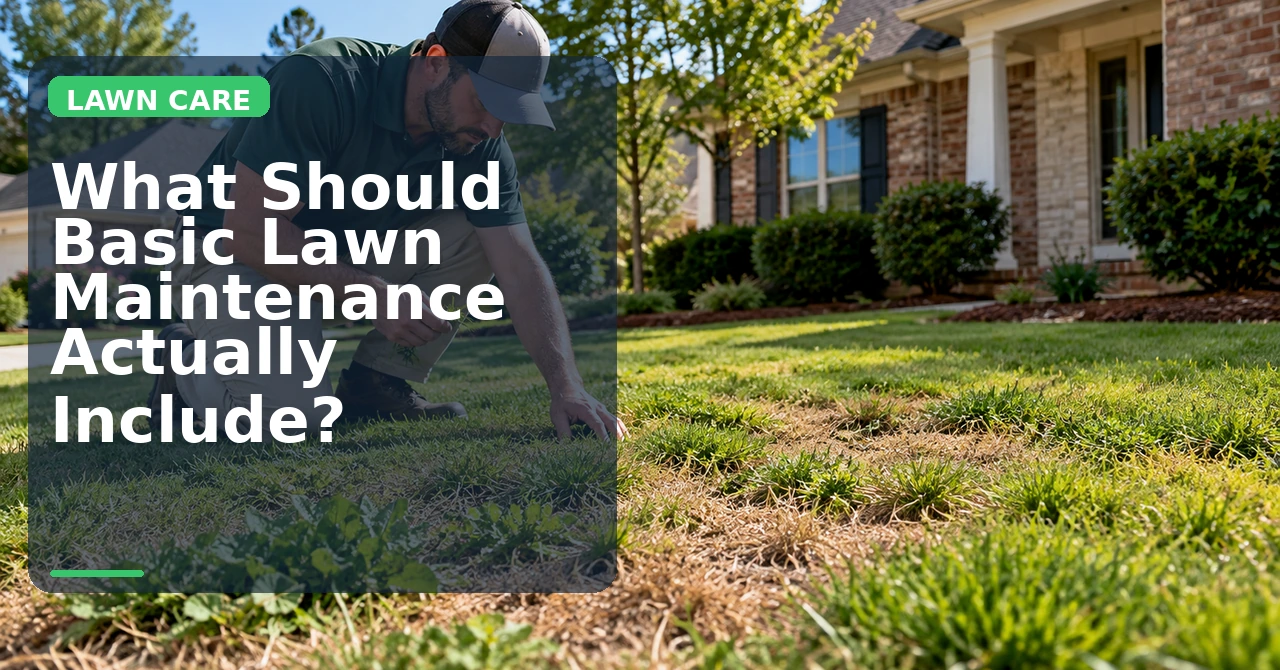
A basic lawn maintenance visit should include four things: mowing the turf, string trimming what the mower cannot reach, edging the hard lines where concrete meets grass, and clearing clippings off the drive, walk and porch. If a quote only covers mowing, the yard will look half finished.
The Four Jobs in a Standard Visit
Mowing is the obvious part. The other three are what make the difference between a cut yard and a maintained one.
- Mowing at a consistent height, with the pattern varied so the turf does not lean one way
- Trimming along fences, beds, foundations, posts and tree bases
- Edging where turf meets driveways, walkways and curbs
- Blowing clippings off every hard surface before leaving
What Is Usually Quoted Separately
Shrub and hedge work, bed weeding, mulch, leaf removal in volume, and overgrown resets are all real jobs with real time attached, so they are normally priced on their own rather than folded into a weekly rate.
The same goes for seasonal work: a heavy fall leaf cleanup or a spring reset after a wet stretch is a project, not a routine visit. Ongoing tidying between those jobs falls under exterior property maintenance.
Questions Worth Asking Before You Book
Ask what is included every visit versus occasionally. Ask what happens after heavy rain, does the visit shift a day or get skipped? Ask how overgrowth is handled if a visit gets missed. The answers tell you more about a service than the price does.
How Mississippi Conditions Change the Job
Central Mississippi lawns do not behave like a generic national lawn-care chart. Warm-season turf, long humid summers, sudden rain and periods of hard heat make timing more important than a fixed calendar. The same yard can grow slowly for two weeks and then need attention again five days after a stormy stretch. That is why a good maintenance plan watches growth, soil softness and grass condition instead of blindly mowing every visit.
Shade changes the picture too. Turf under mature oaks and pines often stays damp longer, grows thinner and shows mower stress sooner. Full-sun areas may be ready to cut while a shaded side yard is still soft. Treating the whole lot exactly the same is convenient, but it is rarely the best way to keep it looking even.
What a Homeowner Should Check Before Booking
These details matter more than a headline price. A low quote can stop being low if every normal part of finishing the yard is treated as an add-on. Ask what the property looks like when the crew leaves, not only what machine they plan to run.
- Whether the visit includes mowing, trimming, edging and blow-off or only mower work
- How overgrown sections, heavy leaf debris and storm cleanup are priced
- Whether gates, pets, irrigation heads or soft ground affect access
- How the schedule changes after heavy rain or during slower shoulder-season growth
A Better Way to Compare Lawn Service Quotes
Compare the finished scope, not just the visit price. One provider may include edging and blow-off while another treats them as extras. Ask how rain delays are handled, whether the route has a normal service day, and how an overgrown first visit is separated from routine maintenance. Those details determine whether a low price stays low over a full season.
It also helps to ask what the crew does when growth is uneven. A good maintenance visit should protect the turf and the property, even when that means changing the order of work or postponing a soft section after heavy rain.
When Recurring Service Makes More Sense
Recurring service is most useful when the lawn repeatedly gets one step ahead of the homeowner. The value is consistency: the turf is cut before it becomes a cleanup, edges stay defined, and small access or drainage issues are noticed while they are still small. One-time service still makes sense for a reset, a property sale, a vacation gap or a specific seasonal cleanup.
If you are comparing options, look at the whole season rather than one visit. A reliable schedule that keeps growth under control can be less expensive than alternating between skipped weeks and overgrown recovery work.
The Lawn Variables That Change the Recommendation
For the query “lawn maintenance checklist,” the useful variables are turf type, growth rate, recent rain, sunlight, soil firmness and the height at the last cut. Those attributes explain why two yards a few streets apart can need different timing. A Bermuda-heavy lawn in full sun can push fast after a wet week, while shaded centipede may stay soft and grow slowly.
Look at the finished turf rather than a calendar alone. Ragged clipping, scalping, wheel ruts, thick windrows of clippings and widening bed edges are all evidence that the interval or mowing method needs to change. The goal is a repeatable maintenance condition, not simply making the grass shorter.
- Grass species and normal cutting height
- Full-sun versus shaded areas on the same lot
- Rainfall, irrigation and whether the soil is firm enough for equipment
- How much growth has accumulated since the last visit
Routine Mowing, Reset Work and Lawn Repair Are Different Jobs
Routine lawn maintenance assumes the yard is already under control. Once grass is heavily overgrown, branches or storm debris block access, or turf is thin enough that mowing is no longer the main problem, the scope changes. A reset may require staged cutting and cleanup; thin turf may need a diagnosis of shade, drainage or compaction instead of more frequent mowing.
That distinction protects the lawn and makes quotes comparable. Ask whether trimming, edging and blow-off are part of every visit and whether an overgrown first service is priced separately. Our lawn care and maintenance service explains the recurring scope, while the seasonal exterior maintenance checklist helps place yard work in the wider property schedule.
What to Send With a Lawn-Care Quote Request
A front-yard photo, a back-yard photo, a note about gates or pets, and an approximate lot size make a remote first estimate much more useful. Mention whether the yard is currently maintained or already overgrown and whether leaf or storm debris is part of the job. In Clinton, also mention any low areas that stay wet after rain.
For a real property, the right answer comes from the condition in front of you, not from forcing a national rule onto a Mississippi home. Photos, dimensions, access and the last service date are often enough to turn a vague question into a useful scope.
Frequently Asked Questions
Does lawn maintenance include fertilizer or weed control?
Not automatically. Mowing, trimming, edging and clearing are the maintenance baseline. Treatment programs are a separate service, and any provider should tell you plainly whether they include one.
Do beds and shrubs get handled on a lawn visit?
Bed and shrub work takes extra time, so it is normally quoted separately or set on its own less frequent schedule.
What happens if it rains on my scheduled day?
Usually the visit moves to the next dry day. What matters is being told, so you are not left wondering.
Related Service and Local Help
If you would rather have the work handled, see our lawn care and maintenance services. For local scheduling and property notes, review service options in Clinton, MS. Continue with How Often Should a Mississippi Lawn Be Mowed?. Continue with Signs Your Lawn Needs More Consistent Care. A connected property-care topic is A Seasonal Exterior Maintenance Checklist for Mississippi Homes. Browse all property-care guides or Central Mississippi service areas for the next step.
Keep Reading
Related Property Care Articles

How Often Should a Mississippi Lawn Be Mowed?
Weekly in peak season, every other week at the shoulders, and the one-third rule that tells you when to cut regardless of the calendar.

Signs Your Lawn Needs More Consistent Care
Before a lawn looks neglected, it starts telling on itself in four specific places.
How to Handle Lawn Mowing After Heavy Rain in Mississippi
The grass may be tall, but soft soil and wet blades can turn a routine mow into ruts and clumps. Here is when waiting…