
Pressure Washing
Pressure Washing vs. Rinsing With a Garden Hose
One removes dust from the surface. The other removes what is growing into it.
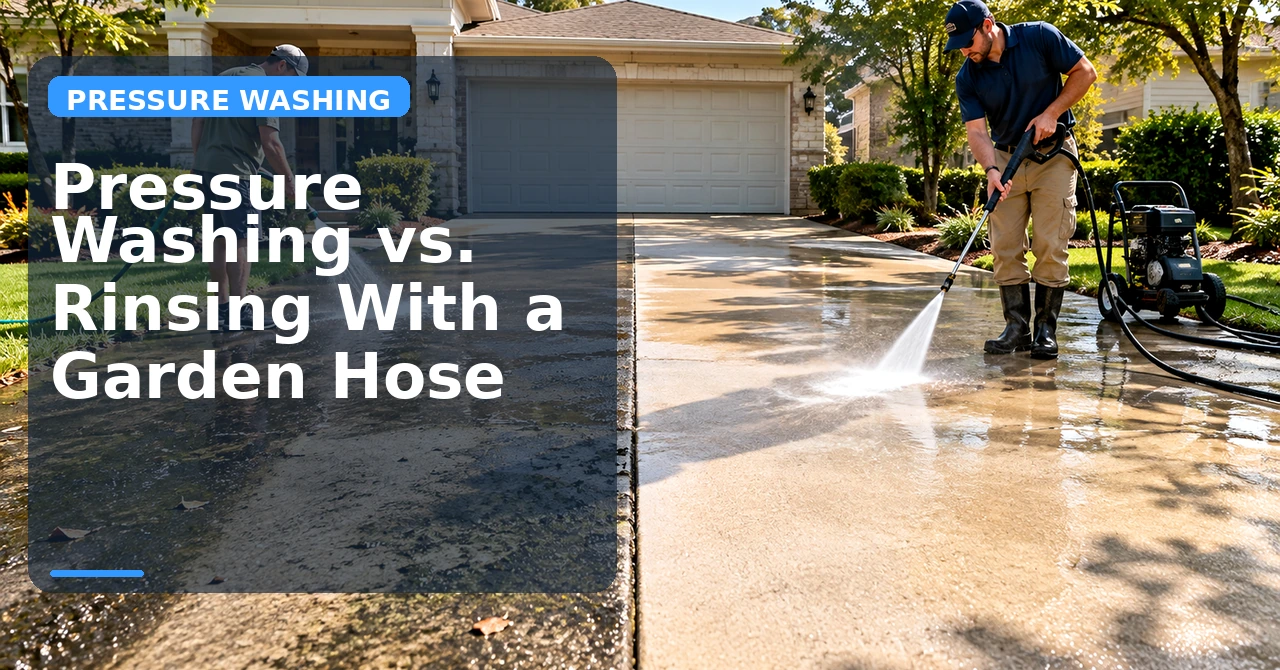
A garden hose rinses loose dust and pollen off a surface. Pressure washing removes the mildew, algae and embedded grime that a rinse cannot touch. If a house still looks dull after you hose it down, that is the difference showing.
What a Rinse Is Good For
Hosing down siding after a pollen week is genuinely useful. It cuts the yellow layer, keeps windows and screens clearer, and takes twenty minutes. For a house washed within the last year, periodic rinsing extends the look between full cleanings.
Where a Rinse Stops Working
Mildew and algae are living growth with a grip on the surface, often in the texture of the material itself. Water pressure from a hose is not enough to break that grip, so the film stays and keeps spreading in the shade.
Concrete is the clearest example. A hosed driveway looks wet, then dries back to the same grey-green. A pressure washed driveway comes back a different color.
When to Hire It Out
Rented equipment closes part of the gap, but the two common mistakes are expensive: too much pressure on siding, and water driven up behind panels or trim. Both are hard to see immediately and show up later as damage.
Ladder work compounds it. Second-story siding, soffits and porch ceilings are where most homeowner washing projects go wrong. That is when hiring the wash is the cheaper decision.
- One-story concrete cleanup: a reasonable DIY project
- Two-story siding and soffits: safer as a hired job
- Painted wood or older exteriors: technique matters more than equipment
- Pre-paint cleaning: get it right or the coat pays for it
Pressure Is Only One Part of Exterior Cleaning
The biggest mistake in exterior cleaning is assuming that more pressure means a better result. Concrete can take a much stronger approach than vinyl siding, painted trim, older mortar or a weathered deck. On a house, the useful question is not “how powerful is the machine?” but “what combination of water pressure, cleaning solution, dwell time and distance is safe for this surface?”
That distinction matters in Mississippi because shaded siding and concrete often carry organic growth, not just loose dirt. Blasting the visible layer can make a surface look better for a short time while leaving the underlying growth or damaging the material. The cleaning method should match both the surface and what is actually on it.
What Changes the Scope and Price
A useful quote should separate ordinary cleaning from stain-removal work that may not come out with a standard wash. That keeps expectations realistic and avoids promising a “like new” result on old concrete or permanently stained material.
- Surface type and total square footage
- Height, ladder access and how much of the work is above ground level
- Heavy algae, embedded stains, oil or rust that need separate treatment
- Water access, landscaping protection and areas that need low-pressure cleaning
Why a Site Walk Matters Before Bigger Washing Jobs
A short site walk catches the details that are easy to miss in a phone quote: loose siding, aging paint, unsealed outlets, fragile fixtures, steep grades and landscaping pressed against the wall. Identifying those conditions first helps choose a safer cleaning method and prevents a standard wash from being applied to a nonstandard surface.
For larger jobs, take before photos of stains or damaged areas. That gives everyone the same reference for what was present before cleaning and which marks were expected to improve rather than disappear completely.
How to Know the Cleaning Was Done Properly
After the surface dries, look for even color, clean edges around steps and joints, and no obvious wand marks. Siding should not have water forced behind laps, vents or electrical fixtures. Plants should be rinsed, loose items returned and runoff kept away from places where it can create a new mess.
For homeowners planning to paint, the standard is different again: the goal is a clean, sound, dry surface that the coating can bond to, not simply a brighter wall on the day of washing.
Surface, Soil and Stain Type Matter More Than Machine Size
For “pressure washing vs garden hose,” start with the material: concrete, brick, vinyl, painted siding, wood and older mortar do not tolerate the same process. Then identify what is on the surface. Loose dust, algae, mildew, oil, rust and leaf tannins behave differently, so a single pressure setting cannot be the answer to every stain.
On siding and painted surfaces, cleaning chemistry, dwell time and rinse technique often matter more than raw pressure. On concrete, higher pressure may be appropriate, but distance and a consistent pass pattern still matter because a wand held too close can etch visible lines into the slab.
- Material and age of the surface
- Type and severity of staining
- Height, access and nearby landscaping
- Loose paint, cracked mortar, unsealed outlets or damaged siding that need protection
Cleaning Is Successful When the Surface Is Safer, Not Just Brighter
A strong result is even after the surface dries, without wand marks, lifted paint, damaged plants or water forced behind siding. Permanently discolored concrete or old rust may improve without disappearing completely. A useful estimate separates routine washing from specialty stain treatment so the homeowner knows what outcome is realistic.
If paint is the next step, read whether a house should be pressure washed before exterior painting. For ongoing exterior cleaning, see our residential pressure washing service.
Details That Make a Pressure-Washing Quote Accurate
Send wide photos of each surface plus a close photo of the worst staining. Include approximate driveway dimensions or the number of house stories, note where the water connection is located, and point out fragile landscaping, screens or exterior electrical fixtures. Those details affect setup time and method more than a generic “whole house” description.
For a real property, the right answer comes from the condition in front of you, not from forcing a national rule onto a Mississippi home. Photos, dimensions, access and the last service date are often enough to turn a vague question into a useful scope.
Frequently Asked Questions
Does pressure washing use chemicals?
It depends on the surface and what is growing on it. Some jobs are water and pressure; others need a cleaning solution to break down biological growth. Ask what will be used on your surfaces.
How often can concrete be pressure washed?
Annually is fine for most driveways and walks. Concrete is durable, and the risk is technique rather than frequency.
Related Service and Local Help
If you would rather have the work handled, see our residential pressure washing services. For local scheduling and property notes, review service options in Brandon, MS. Continue with When Should You Pressure Wash Your House Exterior?. Continue with Which Surfaces Around a House Can Be Pressure Washed?. A connected property-care topic is How a Home Exterior Gets Prepared for Painting. Browse all property-care guides or Central Mississippi service areas for the next step.
Keep Reading
Related Property Care Articles
When Should You Pressure Wash Your House Exterior?
Once a year suits most houses here. Green film, chalky streaks and a dull north wall say do it now.
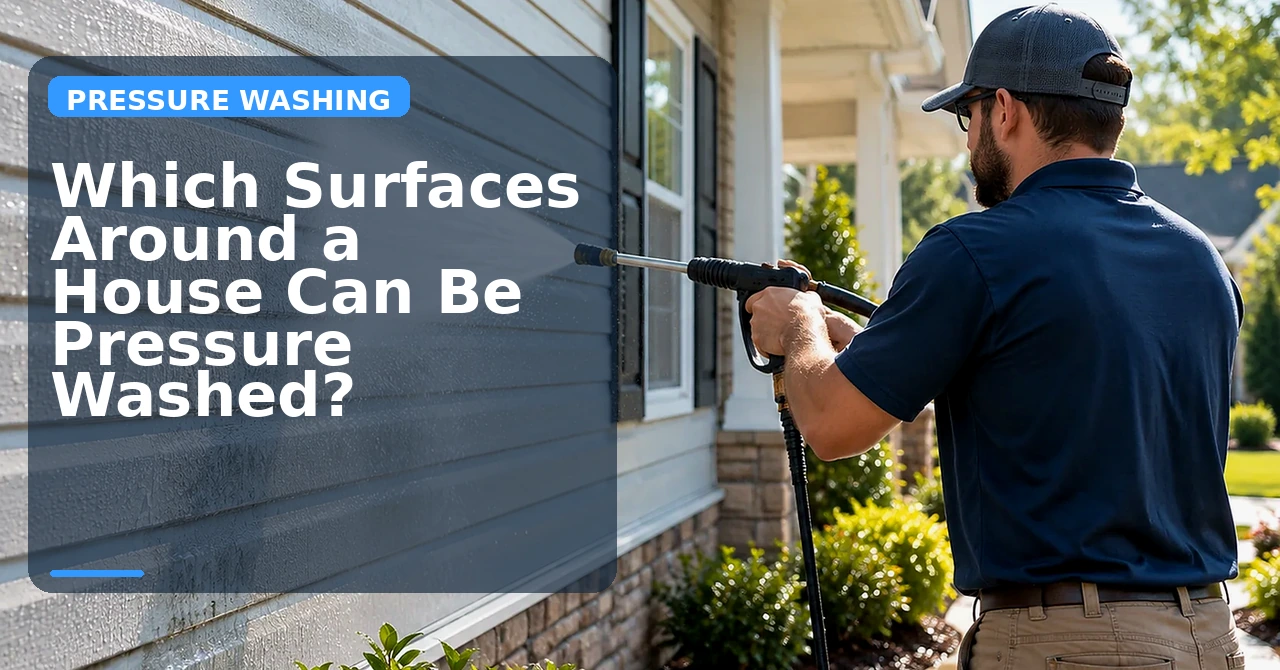
Which Surfaces Around a House Can Be Pressure Washed?
Concrete takes real pressure. Vinyl takes technique. Old paint and shingles take restraint.
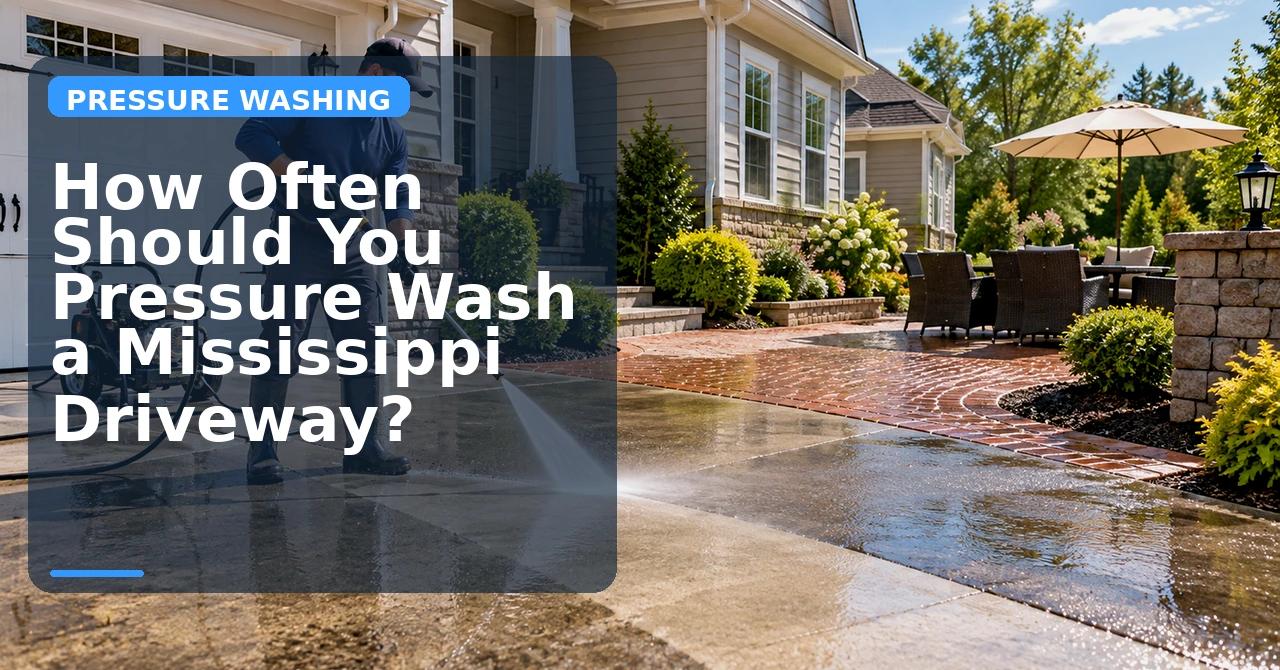
How Often Should a Concrete Driveway Be Pressure Washed in Mississippi?
A yearly wash works for many driveways, but shaded concrete can need attention sooner. Use appearance and traction, not the calendar alone.